

Always putting long term eyecare first

Our patients receive as much time in the consultancy chair as required.
We offer NHS and Private eye examinations using the latest state-of-the-art eye testing equipment to optimise your eye health. This ensures our experienced optometrists can give you the best clinical care and we do not rush you. Everyone receives the time and care needed to give you the best vision and eye health. There will be plenty of time to ask questions.
‘Cutting-edge technology with the traditional values of service’
Eye examinations are £35 or funded by the NHS if you are entitled to NHS care.
History and Symptoms
We first discuss any problems you might have with your eye sight and general health as many eye conditions are health related. We also discuss your work and leisure activities to assess your visual needs.
Eyewear Assessment

If you already wear glasses or contact lenses, we check them to see if they are still suitable for your vision and lifestyle.
Refraction
This part of your examination finds out whether you need optical lenses to correct your eyesight. We test your distance vision (for driving or TV), your near vision (for reading) and your intermediate vision (for your hobbies or computer vision).
Oculomotor Balance and Pupil Reflexes
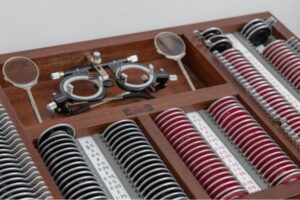
We check that your eye muscles are co-ordinated and you have comfortable vision at all distances. An unusual pupil reflex may indicate neurological problems, so we check that your pupils react normally to light.
Intraocular Pressure
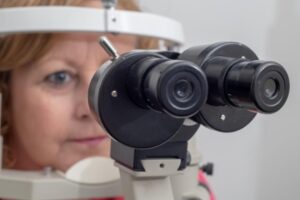
Too much pressure inside your eye can indicate glaucoma, a disease which eventual leads to blindness if left untreated. This test is usually only carried out on people over 40 or those with a history of glaucoma in the family. No eye drops or ‘puff of air’ is required when we measure your eye pressure.
Visual Field Test and Ophthalmoscopy
Losing your field of vision is one of the main signs of glaucoma, so where appropriate we check your all-round vision and peripheral eyesight. Ophthalmoscopy is a very important part of your eye examination because it evaluates the health of your eyes. Conditions such as diabetes, cataracts, hypertension and macular degeneration can be detected and monitored through eye examinations.